Buying guide for best wood chippers
Ready to buy now? Shop the best:
A good wood chipper can solve a number of problems around the yard. For starters, you save yourself from having to lug away all that rough garden waste — and increasingly, it's becoming illegal to dump garden waste in landfills. In many areas, you can't burn your garden waste, either.
A wood chipper can reduce the quantity of garden waste you’re grappling with enormously. If you like to compost, it's a great way to start that process, creating material that would otherwise take years to rot down. You can also use chipped wood for mulching or creating rustic garden paths.
So a wood chipper is an excellent idea, but which one is right for you?Should you buy a wood chipper with a gas motor or an electric motor? What kind of cutting mechanism should it have? What size do you need? We put the top models on the market through our stringent selection process to find the very best for a variety of needs. Our top choice is the powerful GreatCircleUSA Wood Chipper, which boasts a 7-horsepower gas engine to make quick work of any yard debris you throw at it.
Editors' picks
Weight: 124.7 lb | Power Source: Gas-powered | Reduction Ratio: 1:0 | Capacity: 0.7 gal | Motor Horsepower: 7 HP
The powerful GreatCircleUSA Wood Chipper Shredder Mulcher is a serious multipurpose machine. With a 7-horsepower gas engine, a claimed ability to handle branches up to 3 inches thick, and a 3-in-1 setup for chipping, shredding and mulching, it's built for people who want to turn a lot of yard debris into manageable material fast.
We like that it's EPA/CARB certified, which gives it a more responsible edge for buyers who care about compliance, and the 15:1 reduction ratio is especially attractive if your goal is to cut down on piles of brush and leaves quickly.
Overall, we'd say this is a strong option for homeowners, property managers, and rural buyers who need a capable chipper-mulcher and are willing to trade convenience for power. If you want something simple and lightweight, this probably isn't your best fit. But if you want a serious yard tool and you're comfortable with the realities of owning gas equipment, this GreatCircleUSA model can quickly cut down piles of brush and leaves and gives you a lot of utility for the money.
Weight: 21.3 lb | Power Source: Electric | Chipping Capacity: 1.75"
The WEN 41119 Electric Wood Chipper and Shredder is an appealing option for homeowners who want to turn yard waste into usable mulch without jumping to a gas-powered beast. On paper, the 15-amp motor and two 7-inch blades spinning at up to 8,000 cuts per minute give us the sense that this machine is built more for efficient seasonal cleanup than for heavy commercial abuse.
The lightweight 21.3-pound build, combined with 7-inch wheels and a handle, also makes it easier to move around than many bulkier chippers, so if you need to store it in a garage or drag it across the driveway, you'll likely appreciate that portability.
Most buyers find a lot to like here, even if the machine isn't perfect for everyone. Overall, the WEN 41119 a sensible buy for typical suburban cleanup: It's compact, easy to store and capable enough to turn yard debris into mulch with minimal fuss.
Weight: 38.6 Pounds | Power Source: Corded Electric | Reduction Ratio: 1:0 | Voltage: 24V | Audible Noise: 94 Decibels
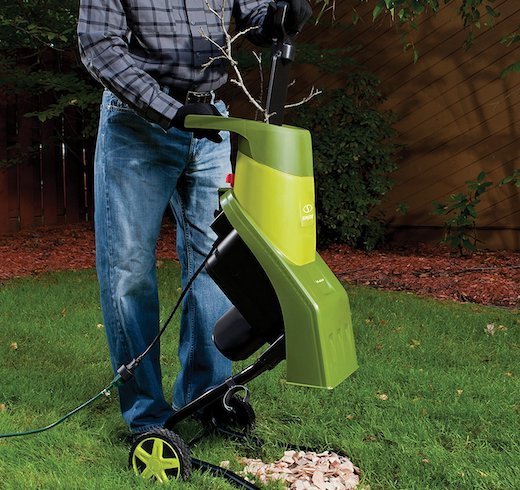
The Sun Joe 15-Amp Silent Electric Wood Chipper Shredder feels like a practical pick for homeowners who want to keep branch and twig cleanup manageable without moving up to a gas-powered machine.
The 15-amp corded electric motor is a strong point for light to moderate yard work because it gives us dependable power without the fumes, fuel or maintenance headaches that come with gas models. Its 1.7-inch cutting diameter is also useful for everyday trimming debris, and the cross-cut design should help turn yard waste into mulch that's easier to bag, compost or spread.
We see this Sun Joe as a solid middle-ground machine for smaller yards, seasonal cleanup and anyone who wants a cleaner, simpler alternative to gas equipment.
Weight: 118 lb | Power Source: Gas-powered | Reduction Ratio: 20:1 | Capacity: 1 g | Engine Size: 212 cc
The Earthquake 33968 K32 is a practical, heavy-duty chipper shredder for homeowners who want serious yard cleanup power without jumping into commercial-grade territory. The 212 cc 4-cycle Viper gas engine is a strong selling point, and for many buyers, that will be the difference between a machine that stalls on dense brush and one that keeps moving through piles of branches and twigs.
Many buyers dislike chipper shredders because the collection process is messy, so the Dock-and-Lock bag connector, bottom-out zipper, and carry handles sound like features designed by people who understand that frustration. That said, the bag's usefulness will depend on how quickly you fill it and how often you stop to empty it, so anyone planning large cleanup jobs should expect workflow breaks.
Weight: 23.2 lb | Power Source: Electric | Reduction Ratio: 14:1 | Engine Size: 42cc
The LawnMaster FD1503 is a compact, no-fuss electric chipper shredder that aims to make yard cleanup feel a lot less like a chore. With a 15-amp motor, a claimed 1.8-inch cutting diameter, and a 14:1 reduction ratio, it’s clearly built for homeowners who want to handle routine branches, leaves and garden debris without moving up to a gas-powered machine. At 23.2 pounds, it’s relatively easy for us to imagine storing, lifting and rolling it around a typical garage or shed, and the electric power source is a real advantage if you want something simpler to start.
The polypropylene construction also sounds sensible for a tool in this price range, since dent-resistant plastic helps keep the unit lighter and easier to move. On the other hand, the 1.8-inch maximum sounds generous, but you’ll likely get the best results staying below that limit rather than pushing it to the edge.
The main limitations potential buyers should keep in mind are the likely constraint of an electric cord, the need to stay within realistic branch sizes, and the possibility that larger or harder material may slow it down more than the marketing implies. Still, if you want an accessible, lightweight chipper shredder that can help you tame yard waste without a lot of setup, this LawnMaster looks like a sensible buy.
Shredder, chipper or chipper/shredder?
The names given to tools that shred and chip can be confusing. Shredders, chippers, and chipper/shredders have a similar layout and do similar jobs, but there are some important differences between them.
Wood shredders
A wood shredder has flails or hammers that are similar to wood chipper blades but aren't sharp. Small wood shredders use nylon cord like you'd find on a weed wacker. They're designed to break down leaves and twigs by beating them to a pulp. They do the job quite well, but they only work with modestly sized waste. They don't have the engine power or the right blade to chip branches.
Wood chippers
A wood chipper has a much more powerful motor and strong internals designed to chop branches into small pieces. There are two common types of wood chippers: rotating disk/blade chippers and drum chippers.
-
Rotating disk/blade wood chippers have either a disk with inset blades or a blade much like that found on a rotary lawn mower. This type of wood chipper cuts at a 45-degree angle to the branch being fed. It's fast and efficient and produces regular-size chips, but notably, soft and stringy materials can cause occasional jams.
-
Drum chippers have a horizontal drum inset with blades. They chop material as it is fed past. Many heavy-duty commercial wood chippers adhere to this design because it can cope with almost any kind of material, wet or dry. However, it does tend to produce randomly sized waste.
The size of branch a wood chipper can cope with varies from model to model, but commercial wood chippers will easily tear through branches several inches across.
Wood chipper/shredders
A wood chipper/shredder doesn't have the brute force of a dedicated wood chipper, but these machines are common due to their ability to handle the materials found in most gardens and yards. They'll chip a decent-size branch and also mulch leaves and other light organic material. For many homeowners, this is the ideal combination.
How to choose the right wood chipper
The best wood chipper for the vast majority of people is undoubtedly a wood chipper/shredder combination, as it offers great all-around versatility.
For the purposes of this report, we're going to focus on that type of wood chipper, although the individual aspects we're going to look at are pertinent to all wood chippers and shredders.
For your safety
Use a long stick or pole to help you feed wood directly into the chipper. Never put your hands into the hopper while the chipper is running.
STAFF
BestReviews
Motor types
As with most garden power tools, you have a choice between two motor types when you select a wood chipper: gas or electric. Gas wood chipper motors are usually around 200cc and produce six to seven horsepower. We recommend reputable brands like Briggs & Stratton or Kohler, both of which are known for their durability. Electric wood chipper motors usually have 14 or 15 amps of power. Anything with a motor power lower than that might struggle to give an adequate performance.
Commercial wood chippers are invariably gas-powered, but homeowner models are evenly split between gas and electric. If you have a large acreage, a gas-powered wood chipper is the only sensible solution. Yes, you could run an electric model off a portable generator – but then you'd have to put gas in that!
If you have a medium plot, the choice between gas and electric becomes a question of personal preference. For smaller plots, an electric model is more maneuverable and generally easier for you – and your neighbors – to live with.
"In some states, gas motors must be CARB-compliant. Check this out before you buy."
STAFF
BestReviews
Gas motor
Pros
Cons
For your safety
Keep your wood chipper well-maintained. Perform safety checks before each use to ensure safety devices work properly and that there are no wood pieces lodged in the blades.
STAFF
BestReviews
Electric motor
Pros
Cons
Did you know?
A wide hopper and
big wheels are great features to have in a wood chipper. The former lets you dispose of big branches, and the latter lets you maneuver the machine over rough grounds.
STAFF
BestReviews
Cutting capacity and waste reduction
Waste reduction
If you're going to dispose of what comes out of your wood chipper rather than use it as mulch or compost, you'll be interested in how much your original pile of garden waste is going to be reduced.
While the materials that make up your waste will have an impact on the reduction ratio, you can expect a ratio somewhere between 10:1 and 20:1.
In terms of waste reduction, electric wood chippers can be just as efficient as gas models.
Cutting capacity
Homeowner wood chippers have rotating disk or mower-type blades. Though there are rare exceptions, a gas-powered wood chipper will generally take a maximum branch diameter of three inches. Most wood chippers with electric motors have a maximum capacity of 1.5 inches.
Notably, the figures above are maximums, and it's fair to say that a manufacturer's max-capacity specs are usually optimistic. Landscape professionals and owners will tell you that you might be able to get a dead-straight branch through at those sizes, but real capacities are usually somewhat smaller.
But even at reduced capacity, these are still adequate capabilities for the waste collected in the majority of yards and gardens. If it's too big to chip, it's probably worth keeping for kindling.
"Should you get an electric wood chipper or a gas-powered wood chipper? The majority of homeowners with modest plots would find an electric wood chipper/shredder perfectly adequate. But if you've got a lot of ground to cover and sizable branches to break down, a gas-powered wood chipper is a sensible long-term investment."
STAFF
BestReviews
Ease of use
We offer the following tips to enhance your ease of use when chipping wood.
-
Consider a wood chipper with a wide chute/hopper. This makes the wood chipper easier to load.
-
Consider a wood chipper with a tall chute if you’re dealing with long branches and don’t want to stand there holding them. However, if you’re dealing with mixed materials, you may prefer a shorter hopper, as they are easier to load.
Caution
Never operate your wood chipper around children or allow a child to help you.
STAFF
BestReviews
-
Consider a wood chipper with a lid. Some wood chippers have a tendency to throw material back out. A lid can help prevent this.
-
Choose a wood chipper with easy access to the blade area. It's almost inevitable that your wood chipper will jam at some point. When it does, you want to be able to get to the blade area quickly.
-
Consider a wood chipper with solid wheels. Almost all wood chippers come with wheels, and the cheapest wood chippers have solid plastic ones that are prone to breakage. Better are plastic or alloy wheels with solid rubber tires. Best of all are pneumatic tires, though these are only of major benefit on poor terrain or if you're towing your wood chipper behind a yard tractor or truck. (Larger chippers often have tow hitches for that purpose.)
Durability
Gas-powered wood chippers have larger capacities and are more likely to be used in tough environments. For this reason, most body parts are metal, and these machines are more durable as a result.
Electric wood chippers have steel blades and frames, but most body parts are plastic. This makes them much lighter, but in theory, it also makes them more prone to damage. If you care for the apparatus properly, however, there's no reason that a plastic wood chipper shouldn't last as long as a metal one.
Wood chipper prices
We usually make a proviso about low-quality products, and the same goes for cheap wood chippers. If you see a product that is notably below the price range of well-known brands, ask yourself why. We all like to save money, but is it really a bargain, or has the manufacturer kept the price down by cutting corners?
Among the better wood chippers, there's a distinct price difference between electric models and their gas-powered counterparts.
Electric wood chippers usually sit in the $100 to $150 price range.
Gas-powered wood chippers typically cost between $600 and $1,000, depending on the specifications.
Wood chipper safety tips
Follow these safety precautions when you use your wood chipper.
-
Read the manufacturer's instructions first.
-
Always wear work gloves and a face shield when using a wood chipper.
-
Wood chippers are loud. Always wear ear protection when you operate one.
-
Waste can occasionally be thrown back out of the chipper. Never peer down the chute when the wood chipper is running.
-
In the event of a jam, always turn the wood chipper off before investigating the problem.
-
Never try to exceed the stated maximum branch sizes.
-
Never leave a wood chipper running unattended.
-
When not in use, keep your wood chipper inside a storage building or cover it with a tarp to protect it from the elements.
-
A collecting bag is a nice addition to a wood chipper, though it’s not common. Tough garden refuse sacks are available for a relatively low cost.