Buying guide for best espresso makers
Ready to buy now? Shop the best:
A morning latte is a daily highlight for millions of Americans. But going to a cafe every day adds up, and you could spend more than $1,000 a year just on your morning fix. That’s why so many are switching over to a home espresso machine.
Personally, I wasn’t convinced by these machines at first — after all, could I really make an espresso drink that would taste even close to what the barista at my favorite cafe could do with all their fancy equipment? But after we got one, I was pleasantly surprised by how easy it was and how amazing it tasted. Though I’m not much of a coffee person, I do enjoy cappuccinos and lattes, and these machines excel at those, along with other drinks.
But how do you know which espresso machines are worth the expense? We did a deep dive, spending weeks testing and researching a variety of models from top brands. In the end, our favorite was the Breville the Bambino Plus, a compact, easy-to-use espresso machine for beginners and espresso enthusiasts alike.
Editors' picks
Breville the Bambino Plus Espresso Machine
Editors' Favorite
Pump Pressure (bars): 9 | Frothing Wand/Steam Feature: Yes | Dimensions (inches): 7.6 D x 12.5 W x 12.2 H | Water Reservoir Size (oz): 64 | Brewing Temperature (°F): 200º
If you liked the look of our top pick but don't have the space for it, the Breville the Bambino Plus Espresso Machine is essentially a smaller version of it. We loved this compact espresso machine during testing, finding that it produced excellent espresso.
It has a simple, easy-to-use interface and attractive design. It offers a convenient one-touch volumetric shot control for either a single or double shot of espresso. “It looks clean and elegant,” our tester Jordan Woika says. “I wouldn’t mind it being a centerpiece in my kitchen.” Plus, the removable drip tray makes it easy to clean.
While the espresso tasted great, we found that it came out a little cool, between 130 and 150 degrees. Given that the machine is supposed to brew at 200 degrees, this seemed a little off, even when you account for the cooling that occurs between the time the espresso is extracted and when it hits the cup.
That aside, we managed to make great espresso drinks with this machine. The steam arm produces silky microfoam that works perfectly in flat whites, cappuccinos and more. You can make the foam manually or automatically with three adjustable milk temperatures and three settings for texture. “It produced thick and velvety foam exactly like it should be,” Woika says. “It made an excellent cappuccino.”
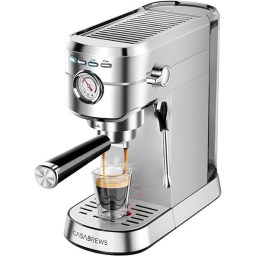
Casabrews CM5418 Espresso Machine
Great Value
Pump Pressure (bars): 20 | Frothing Wand/Steam Feature: Yes | Dimensions (inches): 12.28 D x 5.9 W x 11.97 H | Water Reservoir Size (oz): 34 | Brewing Temperature (°F): 145º to 160º, 266º
With its sleek brushed stainless steel design, the Casabrews Espresso Machine CM5418 looks more expensive than it is. While it won't produce coffee as good as you'd get from a $2,000 machine, it still makes very nice espresso, especially if you're willing to play around with the settings.
An automatic espresso machine, it starts and stops the flow of espresso on its own, so you don’t have to think about it. After filling the portafilter and putting it in place, you just need to press the button for either a single or double espresso, and the machine does the rest. That said, you can manually adjust the cup volume if something goes awry and it isn't pulling the correct volume.
We like that it has a built-in steam arm so you can use it to make specialty drinks, not just espressos. It's easy to adjust the steam volume to get the consistency and temperature you want from your foam. In addition to traditional silver, it comes in a number of colors to go with your kitchen aesthetic.
Ninja Luxe Café Pro Series (ES701)
Best for Iced Drinks and Cold Foam
Pump Pressure: Not available | Frothing Wand/Steam Feature: Yes | Dimensions: 13.39" D x 12.48" W x 14.84" H | Water Reservoir Size: 70 oz | Brewing Temperature: Not available
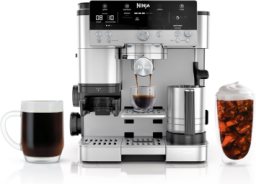
The Ninja Luxe Café Pro Series is a versatile espresso machine that costs far less than some more robust options yet still delivers café-quality hot beverages. With a stainless steel exterior and several brewing options, this machine is designed to be the centerpiece of your kitchen.
It features a magnetic spinning whisk and an automatic steamer that creates silky-smooth microfoam on top of your lattes and cappuccinos for added flavor and texture. Barista Assist Technology is a terrific feature for beginners, guiding you through making your preferred beverage, and the cold-press function lets you make iced coffee and other cold brews.
For regular home use and iced-drink fans, this espresso machine is one of the best options. It won’t cost as much as some premium models, but it delivers outstanding results. It also comes with everything you need to get started, including cleaning tablets, which many models don’t offer.
Breville the Barista Express Impress
Best for Mess-Free Fresh-Ground Shots
Pump Pressure: 15 bars | Frothing Wand/Steam Feature: Yes | Dimensions: 12.5"D x 14.5"W x 16.5"H | Water Reservoir Size: 67.6 oz | Brewing Temperature: 200°F
The Breville Barista Express Impress shines with its smart dosing system that takes the guesswork out of making the perfect hot beverages. If the first dose isn’t quite right, it automatically corrects every subsequent dose, so you get tasty espresso shots without making manual adjustments.
With a 15-bar pump pressure, this machine creates rich, full-bodied lattes, cappuccinos and espresso shots. It features 25 grind settings, so you can fine-tune the extraction and flavor. You can also make milk-based drinks, and the frothing wands help you create a smooth microfoam layer for added texture and flavor. Plus, you don’t need a separate grinder like some cheaper models.
If you want cafe-quality espresso at home without the steep learning curve of more advanced machines, you won’t be disappointed. It’s still a bit pricey, but many customers argue it pays for itself if you take daily trips to the local cafe.
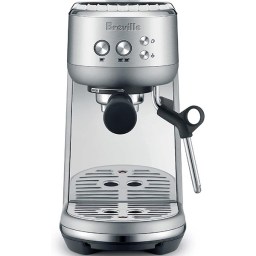
Breville the Bambino
Best for Small Kitchens
Pump Pressure: 15 bars | Frothing Wand/Steam Feature: Yes | Dimensions: 13.7" D x 6.3" W x 12" H | Water Reservoir Size: 47 oz | Brewing Temperature: 200°F
Many of the espresso machines on our list are expensive, with a range of versatile features and options. They’re definitely an investment, so if you want something more affordable to scratch that daily espresso itch, the Breville Bambino is your best bet.
It’s much simpler to use than more expensive machines, so it’s a great choice if you've never made espresso yourself and want to learn quickly. It features an automatic steam wand that adjusts milk temperature and texture to create barista-quality microfoam for rich, flavorful lattes. The innovative ThermoJet system heats the unit in just three seconds, so you don’t have to wait too long for your espresso shots.
Its compact design alone is a big reason so many customers appreciate the Bambino. Its small footprint and sleek design let you place it almost anywhere in your kitchen without taking up too much countertop space. Plus, you’ll get tasty espresso without tinkering with complicated buttons or screens.
De'Longhi Magnifica Duo
Best Push-Button Milk Drinks
Pump Pressure: 15 bars | Frothing Wand/Steam Feature: Yes | Dimensions: 19.69" D x 12.2" W x 16.14" H | Water Reservoir Size: 60.9 oz | Brewing Temperature: N/A
The De’Longhi Magnifica Duo is made by one of the most trusted brands in the espresso machine game, so you can rest assured you’re getting a quality appliance.
With a 15-bar pump, this machine delivers optimal extraction for everything from drip coffee to cappuccinos. The touch screen is a neat feature many customers report makes brewing easier, thanks to 20 preset recipes. It grinds, doses, brews and froths automatically at the press of a button, and LatteCream Hot and Cool technologies let you get rich microfoam with dairy milk or plant-based alternatives. It also has a self-cleaning function that helps with daily maintenance, so it’s ready to go when you are.
The price tag is on the high side, but if you want a quality machine that delivers barista-style beverages, it's worth a look. This model has a bit of a learning curve, though, so it’s best for those who enjoy the craft of making manual espresso.
Breville the Oracle Jet Espresso Machine
Best Splurge With Onscreen Coaching
Pump Pressure (bars): 9 | Frothing Wand/Steam Feature: Yes | Dimensions (inches): 19.2 H x 15 W x 14.5 D | Water Reservoir Size (oz): 77 | Brewing Temperature (°F): 200º
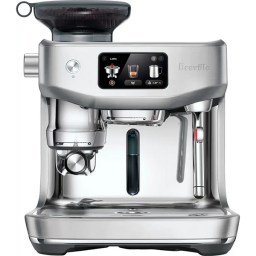
The Breville the Oracle Jet is a machine with a big footprint and performance to match. We loved everything about it in our testing, from its integrated grinder to its steam wand to its automated guidance in making all sorts of espresso drinks.
If it weren’t for its steep price, we’d have named it our top choice. It’s as close as you’ll get to an automated machine that can almost duplicate the results of a professional espresso maker. “Picture your favorite coffee shop,” Hutchinson says. “The espresso you make in this machine will rival or beat that every single time.”
The Oracle Jet combines high-end performance with a high degree of automation. “I was impressed by the onscreen display and how easy the setup was,” Hutchinson says. Truly, no skills are required, as it can guide you step by step in perfecting your technique with grind suggestions and other adjustments to achieve the richest espresso shot.
It integrates a high-quality Baratza coffee grinder and an automatic tamper, a 58-gram professional-grade portafilter, an auto-frothing wand with scheduling and the ability to make cold froth and cold brew.
Not compact, the Oracle Jet takes up 1.5 square feet of counter space, and we found we needed to clean and maintain it slightly more than we’d like. But compared to other machines we tested, it comes closest to making the perfect cafe-grade espresso drinks at home.
Fellow Espresso Series 1
Best for Pressure Profiling
Pump Pressure: N/A | Frothing Wand/Steam Feature: Yes | Dimensions: 23.07"D x 14.57"W x 12.6"H | Water Reservoir Size: 67.6 oz | Brewing Temperature: N/A
Few espresso machines are as suitable for experts yet still beginner-friendly as this one. It’s a semiautomatic machine that offers plenty of hands-on control, making it ideal for anyone who wants to fine-tune settings to make the perfect beverage every time.
Built-in shot feedback is one of the main reasons we love this espresso machine. Instead of repeatedly making poor espresso shots, the Espresso Series 1 detects shots that pull too fast or too slow and suggests grind adjustments so that your next brew comes out better. On-screen prompts walk you through all kinds of drinks, including lattes, cappuccinos and flat whites. You can also manually adjust the brewing temperature to optimize flavor in light, medium or dark roasts.
It’s not as easy to use as machines with one-touch preset recipes, but its guidance lets you make your favorite hot drinks without the complicated guesswork. Plus, it heats in just two minutes, so it’s faster than a standard machine, which can take up to 15 minutes.
Casabrews Ultra
Best Budget Pick With Brew Temp Control
Pump Pressure: 20 bars | Frothing Wand/Steam Feature: Yes | Dimensions: 12.2" D x 10.31" W x 12.9" H | Water Reservoir Size: 73 oz | Brewing Temperature: 194°F to 205°F
If you’re looking for a budget-friendly pick that still delivers high-quality espresso, this model has plenty to love. The Casabrews Ultra is a terrific entry-level espresso machine for beginners or anyone who wants an affordable way to make their favorite hot beverages at home.
The 20-bar pressure system and fast heating extract rich flavors and oils, giving you delicious lattes, cappuccinos and flat whites. You can create latte art with the steamed milk feature, and the user-friendly control panel makes it easy to brew quick espresso shots. It also guides you through each beverage type, so you won’t have to worry about learning or remembering how to make your favorite drinks.
It’s a great beginner-friendly model, and for under $200, it’s a fantastic value pick. It doesn’t have a built-in grinder, and it can be a bit noisy when steaming, but it’s a great starter machine for any espresso enthusiast.
Bosch 800 Series Fully Automatic Espresso Machine
Best for a Huge Drink Menu
Pump Pressure: 19 bars | Frothing Wand/Steam Feature: Yes | Dimensions: 18.4" D x 12.17" W x 15" H | Water Reservoir Size: 81 oz | Brewing Temperature: Not available
The Bosch 800 Series Fully Automatic Espresso Machine is the most expensive model on our list. However, it offers brewing options and features that few other home espresso machines do, making it one of the best choices if you don’t mind spending up.
The large touch screen is perhaps its strongest feature. You can select your beverage and customize the strength, size and milk ratio — and even the aroma based on your preference. The Home Connect app lets you start brewing and adjust things like temperature right from your phone. It also features a convenient cleaning and descaling program to reduce maintenance.
This professional-grade espresso machine suits hardcore enthusiasts who want consistent, barista-style drinks. It’s expensive but worth it if you brew every day and want something built to last.
De’Longhi Stilosa Manual Espresso Machine
Simple Yet Solid
Pump Pressure (bars): 15 | Frothing Wand/Steam Feature: Yes | Dimensions (inches): 8.07 D x 13.5 W x 11.22 H | Water Reservoir Size (oz): 33.8 | Brewing Temperature (°F): 147º to 158º
We tested the De’Longhi Stilosa, and while it wasn't the highest-quality machine of the bunch, it's a great budget espresso machine. If you're looking for something you can usually pick up for under $100 on sale and aren't worried about producing the best-ever espresso, this is a solid choice.
The espressos we pulled tasted slightly under-extracted. However, as a semiautomatic machine, users have to start and stop the flow of liquid themselves — so, with a little finesse and adjustment, you can make yourself a better brew.
We appreciated how easy the machine was to clean overall — aside from the drip tray, which isn't removable. “Because it doesn’t have many pieces to clean, it really took no time at all,” our tester said. However, because it’s primarily made of plastic, we found the build quality a little flimsy, but that was to be expected for the low price.
The steamer arm puts specialty barista-style drinks in the cards for those who want them. While we wished it offered better quality overall, for a De’Longhi espresso maker at an outstanding price, the De’Longhi Stilosa is hard to ignore.
Breville Barista Express Coffee Machine
Best Midrange Machine
Pump Pressure (bars): 9 bars | Frothing Wand/Steam Feature: Yes | Dimensions: 13.8” D x 12.5” W x 15.9.” H | Water Reservoir Size: 64 oz | Brewing Temperature (°F): 200°
A heavy espresso maker with a durable, stylish design, the Breville Barista Express won our tester over with its incredible results. While this isn’t the best espresso machine for beginners, those looking to emulate a cafe-quality experience at home are sure to love it.
This machine does, however, have a bit of a learning curve. For instance, we had to learn how to properly tamp the grounds and remember to follow Breville’s recommended instructions, including preheating the portafilter and basket and drying them before each use.
The grinder does a great job of grinding beans, but you have to pay attention to ensure they’re properly fed into it by the hopper. Despite the learning curve, we were amazed by how well it brewed espresso once we got the hang of it.
Each cup’s flavor was consistently delicious, and the steam wand was easy to use. After brewing an espresso, we simply wiped the machine and steam wand with a damp cloth and ran the steam wand for a few seconds to flush out the steam. If you’re looking to make cappuccinos and lattes at home and want a good deal of control over the results, this machine is ideal.
Breville the Barista Touch Impress Espresso Machine
Cafe-Quality Results
Pump Pressure (bars): 9 | Frothing Wand/Steam Feature: Yes | Dimensions (inches): 13.62 D x 14.09 W x 16.42 H | Water Reservoir Size (oz): 67.6 | Brewing Temperature (°F): 200º
If you're looking for a smart espresso maker, take note: The Breville the Barista Touch Impres can do practically everything for you. A picture touch screen lets you scroll through a range of specialty drinks (flat white, latte, cappuccino and more) to select what you want. Once you do, the machine gets to work.
The built-in grinder automatically grinds the perfect amount of beans for you and has a tamp-assist function to help you get the perfect puck for top-notch espresso. You then put the portafilter in place, and the machine brews the right amount of espresso.
All the while, the Auto MilQ steamer foams milk for you based on your chosen settings. It even has nondairy milk settings. Jordan Woika, one of our coffee testers and a former barista, loved the texture and quality of the microfoam. “It was great! Just how you’d expect it to be from a coffee shop.”
Although it isn't cheap, we love this espresso machine. It takes the guesswork out of making great espresso and barista-style drinks but has a more hands-on feel than fully automatic machines. For most people, we think the Breville the Barista Touch Impress is the espresso maker to beat.
Nespresso Vertuo Pop+ Deluxe
Pump Pressure (bars): 19 | Frothing Wand/Steam Feature: No | Dimensions (inches): 14 D x 8.6 W x 10.4 H | Water Reservoir Size (oz): 37 | Brewing Temperature (°F): 73º to 83º
Sometimes you don’t need a full-fledged espresso machine to get your coffee-drink fix. A Nespresso machine, such as the Nespresso Vertuo Pop+ Deluxe from De’Longhi, can create a small, concentrated coffee drink with some of the richness and power of espresso without any of the extra steps and inconveniences of even the most automated espresso machine.
Nespresso machines, invented by food titan Nestle and licensed to manufacturers such as Breville and De’Longhi, use hot pressurized water to extract espresso-like coffee from pre-packed aluminum Nespresso capsules. This method avoids coffee grounds or portafilters completely and makes coffee in one of three sizes: 5, 8 and 12 ounces. Jordan Hutchinson, our testing and research editor, tried it out and was delighted by the results: “It delivered smooth espresso with an impressive crema on top every time.”
The Vertuo Pop+ Deluxe uses Nespresso Vertuo capsules, which are different from traditional Nespresso pods. Unlike an espresso machine, it can’t create hot milk or foam itself, which means you need a separate milk frother. But it’s fast, convenient and produces flavorful coffee at the touch of a button.
How we tested the best espresso makers
We tested more than half a dozen espresso makers and machines in our Testing Lab, rating them on quality of espresso, ease of use, ease of cleaning and more. We also used insights we learned during testing to help us pick other machines we think are worth recommending. Some of the things we tested include:
- Setup: We studied how long it took us to set up each tested espresso maker, its size and footprint, the instructions it came with and any preliminary procedures required before pulling the first shot.
- Ease of use: We pulled shots of espresso according to both the manufacturer’s instructions and, when applicable, standard espresso procedures. We looked for ease of tamping, portafilter fit, pressure and temperature settings, automated help and, in the case of machines with coffee grinders, convenience, grind speed and grind quality.
- Espresso quality: We judged espresso shots made by each machine, looking for temperature, thickness, body, flavor, aroma and crema.
- Foaming milk: For machines with steam wands or milk frothers, we noted whether we could immediately foam milk after pulling a shot, the steam temperature, whether any pitchers were included, and the consistency and texture of the foam using milk and nondairy alternatives (oat, soy and almond milk).
- Cleaning and maintenance: We followed recommended procedures for purging after a shot as well as daily and long-term maintenance when possible.
Making espresso: The basics
The ideal espresso is rich, smooth, velvety and strong. Espresso feels and tastes richer than regular coffee due to the emulsified oils and particulates extracted during the pressurized brewing process. Creating the perfect shot — known as pulling a shot — is an art that requires some trial and error.
The steps may vary slightly by machine, but here’s a general list of procedures to follow:
- Obtain some dark-roasted coffee beans, and grind them down to a powder-like consistency.
- Pour the espresso into the machine’s portafilter. A portafilter is a handle with a small cup holder at the end.
- After the portafilter is filled, use a tamper — a small, flat-edged device — to tamp down, or flatten, the grinds.
- Attach the portafilter to the group head, where the water comes out, and lock it into place.
- On a manual machine, use a lever to introduce hot water under pressure into the grounds in the portafilter. This should take about 30 seconds to produce a 1-to-1.5-ounce single shot. In an automated machine, press a button to start.
- Remove the portafilter, dispose of the used grounds or puck, and purge or flush the machine briefly with more hot water.
How to choose the best espresso machine according to an expert
We interviewed Alex Mastin, the CEO and founder of Home Grounds, to get his perspective on what you should consider before buying an espresso machine. Mastin broke the decision down into three key components: purpose, style and budget.
Purpose
Mastin recommends considering what you want from an espresso machine before buying. "Well, you want to make coffee, right? But how much? Who for? How often? If you’re an experienced barista, you might want more customization options on your machine.”
For beginners, however, he believes something simpler may be more suitable. If you’re new to making espresso, “you’ll want a machine that you find easy to engage with and makes you want to get up and make a coffee every morning," Mastin says. "Be honest with yourself about how much time you have and how much maintenance and cleaning you can commit to. “
Style, portability and size
Compact design
Espresso makers in cafes are large machines that take up a lot of space. For home users, look for a more compact, lightweight design. A professional espresso machine, even a mid-sized one, can occupy 3 square feet of counter space, while a compact home machine may come in at half a square foot. "If you have a small space, investing in a big espresso machine can be a mistake," Mastin remarks. "It can dominate the space or make it difficult to maneuver around."
Travel-friendly
If you want espresso when you travel but don’t want to spend time and money at a cafe, Mastin suggests considering a portable manual coffee maker such as the AeroPress, which is about 5 inches long and can easily fit in the water-bottle holder of a backpack.
Style
If you invest in an espresso machine, chances are you’re going to keep it out on your counter, so you should enjoy looking at it. “You want an espresso machine that suits your specific style and looks good in your kitchen," Mastin says. "Consider how it coordinates with your other appliances and overall look. However, don’t opt for style over substance. You want something that performs well and fits your decor."
Price and value
Budget-friendly options
The best professional espresso machines can cost thousands of dollars. Even automated home machines can cost upward of a thousand dollars. It’s important to determine your budget and what features you need to have and which you can do without.
Single-serve capsule coffee, such as a Nespresso system, can be more affordable than a full-fledged home espresso machine. There are also budget-friendly machines that may be limited in features or durability but provide the basic espresso experience for just around $100. "Be realistic about your budget, and choose something that suits it,” Mastin says. “You can enjoy your coffee without worrying about your bills."
Long-term value
A quality espresso machine, however, usually offers more long-term value than budget options or single-serve pod machines. Plastic components wear out quickly, and single-serve pods or capsules quickly become a high recurring expense. Good espresso machines have higher-quality parts, better service options and may last longer than low-cost options.
Types of espresso machines
Manual (lever) espresso machines
Experienced espresso enthusiasts can get the most out of manual espresso machines. These machines provide their users with complete control over every step in the espresso-making process. They allow you to control both water pressure and water flow to extract the best consistency and flavor from the grounds. However, these machines can cost upward of a thousand dollars and are best used by true aficionados or those with barista experience.
- Pros: In the right hands, a manual machine produces the highest-quality espresso. It gives you complete control over the process and is perfect for fans of the classic espresso bar aesthetic.
- Cons: These machines are pricey, time-consuming, labor-intensive and come with a steep learning curve — you might as well be a barista.
Semiautomatic espresso machines
Semiautomatic machines require manually starting and stopping the flow of water, but automate many other aspects of the brewing process, providing even, hands-free water pressure as well as grind size, tamping, tamping pressure and extraction time.
- Pros: These machines are suitable for both beginners and experts or those who want good-quality espresso drinks without the hassle of a fully manual machine. It takes the guesswork out of many settings and procedures.
- Cons: They’re somewhat pricey and less convenient than fully automated machines.
Automatic espresso machines
Fully automatic espresso machines automate most aspects of the brewing process, including water flow; users don’t control the pump at all. Loading the coffee and pushing a button are typically all the interactions these machines require.
- Pros: Automatic options are easy to use, even for beginners or those in a hurry. They require little effort and provide consistent results.
- Cons: Lack of control over the process might bother espresso purists. You may be restricted in serving size, extraction time or other elements. You probably will still need to steam your own milk.
Superautomatic espresso machines
These push-button machines automate every step of brewing espresso, from grinding beans to tamping a puck to pulling a shot. Some even automate milk frothing.
- Pros: Perfect for anyone short on time, including early risers, these are great for busy homes or offices, as they provide quick, consistent results.
- Cons: There’s no control over the brewing process. If something goes wrong, they can be hard to fix. They’re often more expensive than automatic or semiautomatic machines.
Capsule/pod espresso machines
Pod espresso machines don’t have portafilters or beans but instead use prepackaged capsules. They differ from pod-based coffee makers in that the extraction process involves pressure, creating a coffee drink that’s closer to espresso than drip coffee. They’re highly convenient and require minimal cleanup.
- Pros: No grinding, no tamping, no loose ground — these machines are fast, simple and automated with minimal cleanup required. Plus, they’re often more compact and space-saving.
- Cons: Expect higher long-term costs due to the use of pods or capsules. Pods or capsules may be less than environmentally friendly. It usually requires a separate milk frother.
Our top picks: Types of espresso machines
- The Breville Barista Touch Impress is an automatic espresso machine whose step-by-step assistance and built-in grinding and tamping were a treat to use in our testing.
- The Casabrews Espresso Maker is a semiautomatic machine that simplifies many aspects of the brewing process while still offering manual tamping and portafilter use.
- The Breville Oracle Jet is a semiautomatic machine that grinds, tamps, pulls and froths with a minimum of user effort. In our testing, it produced what we considered cafe-quality drinks every time.
- The Nespresso Vertuo Plus Deluxe by De’Longhi produces concentrated espresso-like coffee from simple aluminum capsules.
Pump pressure
High pressure for true espresso
Pressure is what makes espresso different from other types of coffee. Espresso machines use boilers to generate pressure that quickly and deeply extract flavor, oils and aroma from fine espresso grounds. Pressure is measured in bars, where one bar equals air pressure at sea level. Look for machines that generate 9 bars of pressure. Some espresso machines for home use boast 15, 19 or even 20 bars of pressure, but may use 9 bars during the extraction process.
Consistent pressure
Generally, you want an espresso machine that maintains a consistent pressure during extraction. It can be hard for low-cost or home-use machines to maintain consistent pressure, but those that do produce good espresso dependably over time.
Our top picks: Pump pressure
- The Breville products in our lineup, including the Barisa Touch Impress, Bambino Plus and Oracle Jet, as well as the Ninja Luxe Cafe Premier, all produce a consistent 9 bars of pressure.
- The Casabrews Espresso Maker can generate up to 20 bars of pressure, but it also includes a pressure gauge that helps inform you about the actual pressure, allowing you to make adjustments.
- All Nespresso machines, such as the Nespresso Vertuo Plus Deluxe from De’Longhi, use 19 bars of pressure to extract coffee from Nespresso capsules.
Ease of use
User-friendly controls
Anyone who isn’t a trained barista will benefit from espresso machines with intuitive controls. Espresso machines for convenient home use offer buttons, labels, automated settings and electronic displays that are seldom found on manual professional machines.
Learning curve
Making espresso is something of an art, not to mention a trade with respected practitioners. Consider how much time and effort you want to invest in learning how to make espresso. If what you want is a convenient way to make espresso-based drinks, like lattes and cappuccinos, at home, your needs may be met by automatic or superautomatic machines.
Our top picks: Ease of use
- We loved the step-by-step assistance and push-button controls of the Breville Barista Touch Impress.
- The screen on the Breville Oracle Jet impressed our tester with its clarity and usefulness.
- Simple, foolproof controls are one of the hallmarks of Nespresso machines like the Nespresso Vertuo Plus Deluxe.
Customization and settings
Adjustable settings
Classic manual espresso makers are highly adjustable at the expense of automation. When it comes to semiautomatic and automatic machines, it can be helpful to have adjustable settings that still do most of the guesswork for you. Some of these settings may include water temperature, shot size, grind size and so on.
Programmable settings
Fully automatic espresso machines may be able to offer programmable settings. These can allow you to create custom settings for shot length, grind size, temperature and milk amount. Features like this allow users without barista skills to create and enjoy custom espresso recipes.
Our top picks: Customization and settings
- The Ninja Luxe Cafe Premier is one of the most flexible and customizable automated coffee machines we’ve ever seen. You can make espresso, brewed coffee, cold brew or hot or cold milk froth, with adjustable grind size and more.
- We appreciated the customizability of the Breville Oracle Jet, especially being able to taste the difference when adjusting grind size.
- Simple, semiautomated machines, like the Casabrews Expresso Machine, can still offer two different brew sizes, ideal for double-shot recipes.
Build quality and durability
Materials
Professional espresso machines are usually made of steel. The strength of steel is required to manage the pressures created by the boilers. Machines designed for home use may cut corners and use plastic for product bodies or shells, but their boiler will still be metal, as will almost all the components of its internal water and steam system. An all-stainless steel machine for home offers the best durability and performance over time.
Commercial-grade components
When shopping for home espresso machines, look for those with commercial-grade components, such as portafilters, group heads or boilers.
Ease of maintenance
An espresso machine needs to be purged after every shot to clear out its system. Aside from that, regular cleaning of pumps, boiler setups and thermostats, group heads, water reservoirs, drip trays and so on crucially maintains an espresso machine’s performance. Some machines may offer self-cleaning features, but it’s good to try to maintain as much as you can manually for thoroughness. For example, in a professional manual machine, you may need to replace the group head gasket and screen.
Our top picks: Build quality and durability
- The Breville Oracle Jet is almost all stainless steel, and, in our tests, told us exactly when, where and how to clean it. It looks and feels like a premium product.
- The Breville Bambino Plus was also easy to clean and maintain in our testing, with many cleaning tasks being automated.
- The Breville Barista Touch Impress has a mostly stainless steel build, was easy to take apart for cleaning, and boasts a professional-grade portafilter.
Water reservoir size
Capacity
Espresso machines come with water reservoirs to create the heated water and pressure required for brewing. The size of the reservoir determines how many shots of espresso you can make. One standard shot of espresso is 1 fluid ounce or 30 milliliters, and a double shot is 2 ounces or 60 milliliters. A large reservoir can save you extra work, but changing water frequently keeps it fresh.
Easy refilling
Refilling any coffee maker reservoir can be messy. Look for an espresso machine with a removable water reservoir that you can bring to a water source rather than having to fill it in awkward positions.
Our top picks: Water reservoir size
- The biggest water reservoir in our lineup belongs to the Breville Oracle Jet at 77 ounces or 2.28 liters. It’s removable as well.
- The Ninja Luxe Cafe Premier has a roomy 70-ounce removable water reservoir for not only espresso but also drip coffee and cold brew.
- The Breville Barista Touch Impress has a 64-ounce water reservoir that also detaches for more convenient filling and cleaning.
Temperature control
Stable brewing temperature
Espresso machines must produce a consistent water temperature of 197 to 205 degrees. A PID (Proportional-Integral-Derivative) temperature control system is found on the best espresso machines to maintain a stable water temp. It can take an espresso maker anywhere from three to five seconds or longer to get to the appropriate temperature.
Boiler system
An espresso machine has at least one boiler to generate hot water, pressure and steam. A single-boiler machine can brew espresso and steam milk, but not simultaneously, and often takes a certain amount of time to go from one to the other. Double-boiler espresso machines can brew and steam simultaneously, so they’re ideal for making espresso and milk drinks quickly.
Our top picks: Temperature control
- The Breville Barista Touch Impress, Bambino Plus and Oracle Jet all promise 200-degree brewing temperatures.
- The Casabrews Espresso Maker has a PID, impressive for an entry-level machine.
- A Nespresso machine like the Nespresso Vertuo Pop+ Deluxe uses a slightly different temperature, 172 to 181 degrees.
Milk frothing and steaming capabilities
Manual steam wand
A steam wand uses the pressurized steam of an espresso machine to heat and foam milk. A manual steam wand can heat milk and generate foam for lattes and cappuccinos with artisanal control over the temperature and flavor of the milk and the texture of the foam. Skilled baristas can create foam that is ideal for latte art.
Automatic milk frother
Automated steam wands and milk frothers heat milk to a specific temperature and generate foam or froth following specified settings. They are less flexible in results than manual wands but are easier to use and more consistent for beginners or people who don’t want to expend time and effort.
Milk frothing power
Frothing and steaming require steam pressure. The espresso machine must provide enough steam pressure to effectively and quickly create the microfoam ideal for lattes and cappuccinos.
Our top picks: Milk frothing and steaming capabilities
- Our tester obtained milk and foam results from the helpful and guided Breville Barista Touch Impress, almost exactly as they remembered from their time as a barista. They also liked how it had a fully manual option.
- The Breville Oracle Jet not only had an automated milk wand but also could adjust its milk performance depending on what kind of milk, including plant-based milks, you used.
- The Ninja Luxe Cafe Premier has preset milk settings, including thin froth, thick froth, steamed milk and cold foam.
FAQ
Q. How should I care for my espresso machine?
A. After every brewing session, it’s important to run a shot of water through the machine to keep it clean. If you don’t, sediment can build up through repeated use.
If your machine permits it, you should perform a clean-water backflush every 10 to 15 shots. This requires you to put a stopper in your portafilter to reverse the water flow. When you’re done using it, wipe down the exterior of the machine to keep it looking great.
Q. What is the difference between an espresso maker and a coffee machine?
A. Coffee makers are inexpensive machines that generally drip hot water over ground coffee beans to brew coffee. Espresso machines use pressure to force hot water through the grounds quickly. Lower-pressure machines tend to produce more flavorful espresso, but you generally want at least 9 bars of pressure.
Q. What kind of coffee should you use in an espresso machine?
A. Most espresso machines call for finely ground coffee, allowing the water to extract more aromatic chemicals. You can use regular ground coffee in espresso machines, although most people prefer to grind their own. Freshly ground coffee beans produce a better flavor, and you’ll have more control over the consistency.
Sources
- We tested four espresso machines first-hand.
- Interview with Alex Mastin, Founder and CEO of Home Grounds
- How Does Temperature Stability Affect Espresso Extraction?, Zoe Stanley-Foreman
- How Many Oz Are in a Shot of Espresso?, Tony Barlow
- Espresso Machine Cleaning and Maintenance, Clive Coffee
Our expertise
Jmar Gambol has written more than 100 articles for BestReviews since 2021, including buying guides and comparison articles about coffee makers, coffee grinders, French presses and Nespresso machines. He’s been an avid coffee drinker since he was too young to drink it.
Lauren Corona, a longtime coffee lover and writer for BestReviews, contributed to earlier versions of this article.