Buying guide for Best fitness trackers
Ready to buy now? Shop the best:
I remember when I bought my Fitbit back in 2021. It was amazing to see how differently I approached health and fitness once I had a reliable way to track my steps, calories and even sleep habits. I've since used other Fitbits and an Apple Watch, and I've found that there's a lot to appreciate across different brands.
Fitness trackers vary in design and tracking features. When shopping, you should also consider what you want to track. Common measurements include heart rate, sleep pattern, steps and distance. You won't magically improve your health or fitness by simply wearing a tracker, but owning and using one can help you stay on top of your goals.
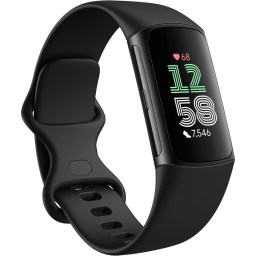
We researched the latest fitness trackers on the market and compared specs and prices to determine the best ones. Our top choice is the Fitbit Charge 6, which provides accurate health and fitness stats to help you stay on top of your goals.
How it looks
Fitness trackers have evolved to become stylish pieces of fashion tech. You can wear a fitness band. Many come in numerous color choices. Some offer display screens; others do not. If you plan to wear your fitness band all day, including at work, consider a design that fits with your business attire.
Models with display screens
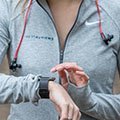
Fitness trackers with display screens are common. Many look like wristwatches. Because these trackers are so comfortable to wear, many people find them far more convenient than exercising with a smartphone.
How it fits
Most trackers are wearable; many fit the wrist. Other options exist, however, including a clip-on tracker for a collar or pocket. Necklace designs are also available, as are units that clip to a shoe or ankle. Look for a fit that corresponds to the type of exercise you enjoy.
A fitness tracker on your wrist won’t track heart rate as accurately as a medical monitor strapped to your chest.
STAFF
BestReviews
Where it works
Most fitness trackers can withstand any exercise environment you encounter. Neither cold nor hot weather should affect them. But if you want a tracker for swimming, you’ll need a model that is wearable underwater. Some fitness trackers can withstand water submersion, but most cannot.
Expert TIp
Colder weather can drain the battery faster than warm weather, so keep that in mind before your next winter marathon.
BestReviews Fitness Expert
Features
If you use a smartphone app now to track your exercise routine, understand that a fitness tracker device works a little differently. A tracker measures certain aspects of your movement. It then pairs with an app to determine whether you’re meeting your goals. Fitness trackers can track some interesting aspects of your movement, including the following —
- Steps: This is often the most basic type of information measured. You can use it to gauge exactly how much you move throughout the day.
- Heart rate: Many fitness trackers act as a heart-rate monitor during periods of exercise as well as rest. One way to gauge an improving fitness level is by an improved heart rate at rest.
- Sleep: If you aren’t sleeping well, your overall health will suffer. Some fitness trackers offer sleep tracking. By measuring your movements during the night, you gain information about the quality of your rest.
- Overall workouts: Unless a fitness tracker has a GPS chip built into it, it won’t be as effective at tracking some workouts. You need GPS capability to determine how far you ran or biked, for instance. The fitness tracker’s app enters the picture here, as it can track many types of workouts successfully.
- Sports apps: Some trackers, like the Garmin vivoactive, give you the ability to track your performance in specific sports, such as golfing or biking.
Expert TIp
Caloric burn readings can be inaccurate based on the watch’s algorithms and should be used as a guesstimate.
BestReviews Fitness Expert
How a fitness tracker works
Fitness trackers provide the data listed above thanks to a variety of internal components.
Motion sensing
Much of a fitness tracker’s data collection occurs courtesy of its motion-sensing components. For example, here’s a look at how a tracker uses motion-sensing technology to monitor your sleep: a three-axis accelerometer determines which direction you’re moving, and a gyroscope measures the rotation of the fitness tracker. Using these technologies, the tracker measures your wrist movement during sleep, judging the frequency and force behind the moves. Software in the app then determines whether you’re moving often enough during the night to cause you to sleep poorly.
If your fitness tracker has a GPS built into it, its battery life probably will be less than average.
STAFF
BestReviews
GPS
Having a GPS unit on a wearable fitness tracker is great for runners and bikers. This feature allows the unit to measure the distance you’ve traveled, even if you’re running or riding in a rural location.
Optical sensors
Mid-range and high-end fitness trackers sometimes contain optical sensors, such as a heart rate sensor. The unit uses these to shine a light on your skin, which allows the tracker to “see” your pulse and act as a heart rate monitor. It measures the way blood moves through your capillaries.
Bioimpedance sensors
Rather than optical sensors, some fitness trackers place tiny electrodes against your skin. The tracker is then able to act as a heart rate monitor. A fitness tracker with bioimpedance sensors should be more accurate than one with optical sensors.
Measuring altitude
Some mid-range and high-end fitness trackers include an altimeter, a device that measures your current altitude. This measurement is helpful for distance runners who work out in the mountains. If stair climbing is part of your workout routine, the altimeter can also determine how high you climbed.
Temperature sensor
Some high-end fitness trackers include a temperature sensor that rests against your skin. This measurement can help determine if you’re overheating during an especially tough workout.
Working with the app
Because fitness trackers are such simple devices, many cannot analyze your exercise results on their own. Instead, these units rely on an app to show you your activity results. If at all possible, you will want to look at the app before you pick a fitness tracker. Make sure it has all of the features you need. And make sure it will work with your iOS or Android smartphone before you buy it, as some apps are limited to one type of smartphone operating system.
The fitness tracker will make a wireless connection with the app at various points during the day. It will then upload any fitness tracking data it has collected.
Real-time data tracking
As these devices grow more sophisticated, some have begun to offer data tracking in “real time.” For example, a tracker with built-in GPS may not need to sync your data with an app to provide you with pace and distance data. If you are looking for a running watch with such a benefit, expect to pay at least $100 for it, and note that this feature is not offered by all devices … yet.
Make sure the app can track your favorite types of exercise. If you’re a swimmer, the app should be able to time your laps and measure distance. If you’re a runner, you may want it to take notes about the type of weather you encountered on a particular run.
And, of course, the more data the fitness tracker can send to the app related to your favorite exercise, the better. You don’t want to spend a lot of time entering your own information. After all, that's the point of wearing the fitness tracker: it measures and records your activity for you.
Expert Tip
Be sure to enjoy workouts, and try to avoid becoming too attached to reading your watch’s display while exercising. Take breaks and enjoy the scenery and your workout environment. Many of us spend lots of time looking at screens, so exercise can be an opportunity for a break from screen time.
BestReviews Fitness Expert
Price
Least expensive (up to $50)
Fitness trackers can start as low as $15. Just don’t expect these basic models to generate a huge amount of data. You might receive information about steps taken and calories burned with these inexpensive activity trackers, and some even offer sleep tracking. However, you’re not likely to find a fitness tracker with a touchscreen display on its watch face; these inexpensive trackers typically use LED light indicators instead. Even if it does have a touchscreen, it may be a bit more finicky and less user-friendly than that of a higher-end unit.
Note that although some bargain-priced fitness trackers are advertised as swim-proof, we hesitate to trust the validity of this claim in all instances. If you purchase a budget fitness tracker for basic statistics, this may suit your purposes. However, if you plan to track swim data with your new device, we recommend going up to at least the mid-range pricing tier.
An exception is Xiaomi Mi bands, some of the best fitness trackers for those on a sub-$50 budget. However, you will need to use the Mi Fit app, which not everyone likes, and some say the band is not best for cardio.
Mid-range ($50 to $100)
Mid-range devices measure movement during sleep (sleep tracking) along with steps taken, calories burned, and some other basic stats — and they do so with more reliability and user-friendliness than cheap fitness trackers. A primary example of a tried-and-true fitness tracker in this price tier is the Inspire HR from Fitbit, which first appeared in 2019 and has accrued many fans since it emerged.
Most expensive (up to $500)
Design and fitness features markedly improve as you move into the $100+ category. These are the best fitness trackers, made expressly made for people who want to monitor their daily activity and how their habits mesh with their goals. If precision is key for you in terms of blood oxygen saturation, active and resting heart rate tracking, swim tracking, and more, look here for the best buy.
This price tier also appeals to those who want to make contactless payments from their wrist.
Impressive smartwatch features including multiple-day battery life, cellular connectivity, built-in virtual assistant programs (like Alexa), and the ability to stream music through media services like Spotify, are easier to find in this price tier. If you want the best smartwatch/fitness tracker combination possible, look here.
To determine calorie burn, the software applies a formula to the fitness tracker data. Because each unit’s formulas are different, you could feasibly receive two different calorie burn results from two trackers worn at the same time.
STAFF
BestReviews
Tips
- Some products take heart rate monitoring to the next level. For example, you can get an ECG app for some Apple Watch Series trackers to measure heart rhythm. The app can check for signs of atrial fibrillation, a condition that can result in serious health problems like stroke.
- Some products incentivize exercise with points. For example, some Fitbit products offer you the ability to track Active Zone Minutes, a state of heart rate elevation also known as the fat-burning zone. You earn one point for every minute you spend in the fat-burning zone. Push yourself to the cardio zone, and you can earn two points per minute.
- Some products don’t have GPS built in; instead, they offer “connected GPS.” Buyers should be aware of this distinction. With a product boasting connected GPS, you will need to keep your phone or other tethered device (Android, iPhone) with you. Connected GPS saves the company on manufacturing costs, but some consumers find it a burden.
- You may be able to get a free trial for subscription services like Fitbit Premium. Fitbit Premium offers some cool extras, such as guided workouts and detailed breakdowns of your health stats. However, it comes at an extra cost that some consumers would rather not pay. You can try this subscription for free, though you may need to enter a payment method first. Some trackers, like the Fitbit Inspire 2, come with an automatic free trial.
- Some fitness trackers allow you to make payments via smartwatch. For example, if you own a Fitbit, you may be able to use Fitbit Pay. Make sure your bank participates with Fitbit Pay first. Further, some models allow you to make contactless payments, like the Fitbit Charge 4. Similarly, if you own a tracker from the Apple Watch series, you may be able to use Apple Pay.
- Note whether a product has a long battery life. Nowadays, a span of seven days is considered a long battery life, though a length of 10 days is also offered by some products. Solar charging is an additional option that can extend your battery.
- You might like working with third-party apps. Third-party apps are unaffiliated with your fitness tracker purchase. Some are free, and some have a cost. Most are compatible with all devices, including iOS, but read the fine print to be sure.
FAQ
Q. Should I choose a fitness band or a smartwatch?
A. Start with whether you want a compact activity tracker or a watch with a larger interface and more everyday functions. The Fitbit Charge 6 is a wristband-style tracker, while the Google Pixel Watch 5 is a smartwatch. Compare comfort, display readability, notifications, and charging requirements alongside the activity features you will actually use.
Q. How do I check whether a fitness tracker works with my phone?
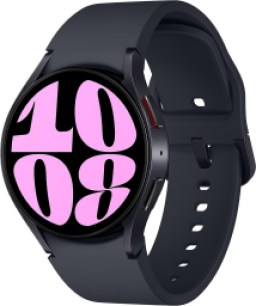
A. Check the required phone operating system and version, companion app, and any restrictions on individual features. The Apple Watch Series 11 and Samsung Galaxy Watch6 (Renewed) use different ecosystems, so do not assume they will work equally well with your current phone.
Q. Why does built-in GPS matter on a fitness tracker?
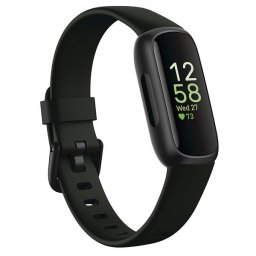
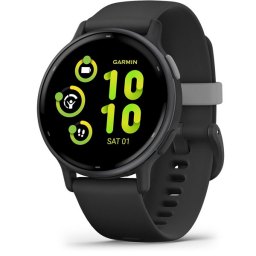
A. Built-in GPS can record an outdoor route and distance without relying on your phone’s GPS connection. The Garmin Vívoactive 5 is a GPS smartwatch; when comparing it with a compact tracker such as the Fitbit Inspire 3, check whether route tracking is built in or phone-connected. Also compare battery-life estimates with GPS enabled, since continuous location tracking uses additional power.
Q. What should I consider when choosing a tracker to wear overnight?
A. Comfort, fit, and charging habits matter when you want consistent overnight use. The Oura Ring 5 offers a ring design, while the Google Fitbit Air is a screen-free activity band. Check the sizing guidance and how you will view data in the app before choosing the form that fits your routine.
Q. Should I include subscription costs when comparing fitness trackers?
A. Yes: compare the device price with the cost of any membership needed for the features you want. The WHOOP 5.0/MG Activity Tracker listing includes a 12-month membership, while the Fitbit Charge 6 has optional Fitbit subscription services to consider. Check what remains available after a trial or included membership ends and review the renewal terms before deciding.
Our expertise
Kevin Luna has covered the tech category at BestReviews for over four years, writing more than 100 articles on everything from smartwatches, to laptops, to gaming consoles. He currently sports an Apple Watch SE to help him stay on top of his health and fitness goals.
Judd NeSmith, NASM-CPT, PES, is the founder of Serious Fitness, established in Boulder, Colorado, in 2003. Judd created Serious Fitness to specialize in 1-on-1 personal training and has logged more than 25,000 hours of helping individuals achieve optimum fitness.