Buying guide for best 3D printers
Ready to buy now? Shop the best:
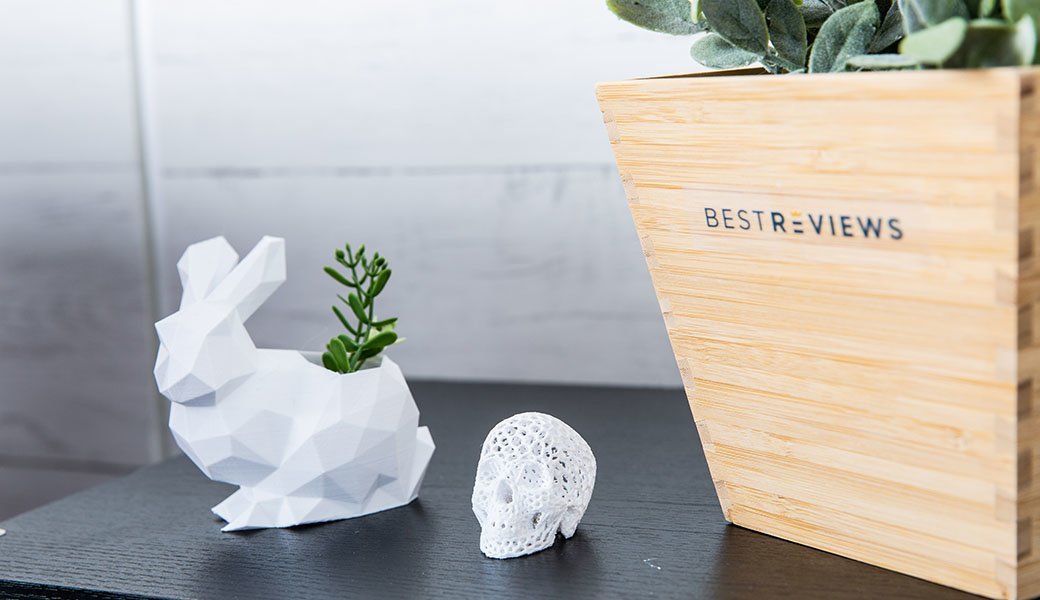
Ever see figures from your favorite video games or movies while shopping in malls? Wouldn't it be great if you could just make them yourself right at home?
With 3D printing, that's exactly what you can do. It's a relatively new technology, so there might be a few things about it that sound confusing or complicated. I won't lie to you, 3D printing does have a learning curve. But you can quickly learn the ins and outs in just a day or two.
Once you get the hang of it, you can print everything from kitchen gadgets and home decor to utility tools and toys. High-end 3D printers, such as the Dremel DigiLab Flex 3D Printer, offer automated features for easy printing and starter guides for beginners.
3D printing explained
3D printing involves a vastly different process than printing on a piece of paper with an inkjet printer. A 3D-printed object is exactly that — a three-dimensional, physical object. Most consumer-grade 3D printers produce objects in various forms of plastic. However, other printers can create objects from a wider variety of materials, including metals, wood, concrete, and even chocolate or confectioners sugar.
The first step in 3D printing is the creation of a model. This can be done with software or through the use of a 3D scanner. (There are also plenty of places to simply download 3D models online.) The 3D printer brings the models to life, building an actual object from the computer drawing.
Large manufacturing companies have used 3D modeling and printing for a few decades. But as the price of 3D printing has dropped, and the technology has evolved, manufacturers now sell smaller printers for use at home.
Types of 3D printers
Three major types of 3D printers are available today, though only two of those are typically affordable for home us. Each type has a few pros and cons, as we’ll discuss next.
FDM
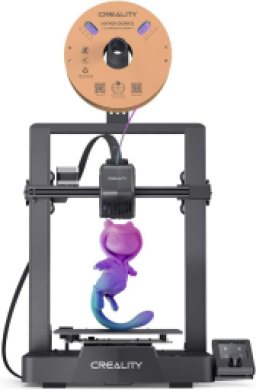
FDM, short for Fused Deposition Modeling, is the most common type of desktop 3D printer. The FDM printer uses a spool of filament, typically plastic, as the print material. The filament is melted in an extruder, then deposited onto the print bed, layer by layer. The layers fuse as they cool. FDM printers work faster than other 3D printer types and cost less than other types. However, this type of printer requires regular maintenance and frequent cleaning. The extruder can clog, especially when using a specialty filament, so some knowledge is needed for occasional repair.
For your safety
Follow any other specific maintenance tasks that are listed in your 3D printer’s user guide.
STAFF
BestReviews
SLA
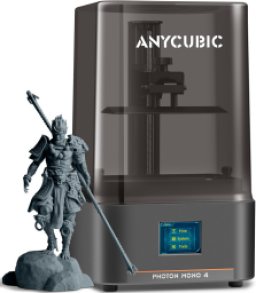
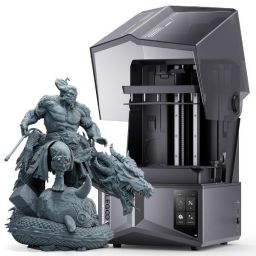
SLA, short for Stereolithography, works in a very different manner. Instead of the melted filament of an FDM printer, a reservoir of liquid resin is used to create 3D objects. The SLA printer uses ultraviolet light to harden the resin in precise spots, producing one layer after another. SLA printers work well for creating very high-specification designs because of the thinness in the layers. However, the final liquid resin objects have a brittle consistency. You also will experience a lot of messy leftover material with this type of 3D printer.
SLS
SLS, or Laser Sintering, makes use of a powdered material to create the 3D objects. A laser heats the powder to make it solid. Very few SLS printers are offered at an affordable price point, so you won’t find a lot of SLS 3D printers in use in homes. These printers are extremely precise, allowing for high-level models.
Out-of-the-box printers vs. kits
3D printing can be a lot of fun, but it also may involve a lot of time and troubleshooting. If you don’t enjoy the challenges of a fledgling technology, 3D printing might not be for you. But if you enjoy the ups and downs of learning a new skill, playing with technology, and learning from your mistakes, you’ll almost certainly love 3D printing.
Out-of-the-box printers
New to 3D printing entirely, or simply have no interest in electronic assembly? Look for a machine that has been assembled at the factory and will be ready to use out-of-the-box, with simple software included. You may have to do a bit of calibration and troubleshooting from time to time, but this type of machine will be the easiest to use.
"Run calibration tests on your 3D printer regularly to ensure the unit will give you the best possible performance."
STAFF
BestReviews
Kit printers
Some 3D printing enthusiasts are also electronics hobbyists – people who like to play with tech devices and don’t mind challenging tasks. Look for a 3D printing kit, which has some automatic features. You will need to assemble the machine yourself, but all the parts will be in the kit. Kits can be significantly less expensive than out-of-the-box printers. However, such machines are not perfect. You’ll still need to do calibrations and troubleshooting on a regular basis.
Full assembly
If you enjoy tinkering with machines, you have the option of building a 3D printer from scratch. You can purchase individual parts and construct your own machine at whatever size you like. Only people who have experience with machine building and 3D printing should attempt this process. There will be frustrations along the way, so just be prepared to make mistakes and learn from them.
3D printer features
There are many features and options to choose from when you shop for a 3D printer. Here are a few of the most important to consider.
Self-leveling
Leveling is a crucial part of the 3D printing process. The print bed must be perpendicular to the extruder for your printer to create objects successfully. Many printers are leveled manually — you adjust three or four wingnuts below the printhead while gauging the gap between the print bed and extruder nozzle. Self-leveling printers can save you a great deal of time and headache. Using sensors and motors, the self-leveling printer takes care of leveling before each print job.
Did you know?
Leveling the print bed is crucial to ensuring successful prints. Some printers offer an automatic or “self-leveling” feature, which can save you a lot of time and frustration.
STAFF
BestReviews
SD card
Your 3D printer has to be given a file, usually referred to as “gcode,” to direct the printhead. Most printers allow you to plug a laptop or desktop computer directly into the printer, but it’s far more convenient to put the gcode file on an SD card. Keep in mind that many prints require hours (or even days) to complete. If your printer doesn’t accept SD cards, your computer must remain attached to the printer through the complete printing time.
Heated print bed
The two most common materials for printing on an FDM printer are ABS and PLA plastic. ABS plastic absolutely requires a heated print bed; your objects simply won’t print successfully without one. PLA can be used with a non-heated bed, but most users report greater success with a heated bed. Some printers come with a heated bed as a standard offering, while others offer it as an upgrade. Some, however, don’t allow for a heated bed even as an aftermarket addition.
"For the best chance of successful prints, clean your print bed after every task. Debris and dust prevent the plastic from sticking to the bed, potentially ruining a print halfway through the job."
STAFF
BestReviews
WiFi
Similar to SD card support, some printers allow you to connect via WiFi.
Single- vs. dual-extruder
The majority of home printers are single-extruder. The printer only feeds one spool of filament at a time. If you want to change colors or material in the middle of a print, the printer must allow you to pause the print, swap out the filament, and resume printing. Dual-extruder printers support two filaments at once, allowing you to mix colors and material types within a print. While some 3D printing enthusiasts consider this an extremely helpful option, most are content with single-extruder printing.
FAQ
Q. How much noise do 3D printers create?
A. Because a 3D printer makes use of drive belts and motors, it does create a bit of noise while operating. It’s not an extremely annoying type of noise, such as you might find with beeps or high-pitched whines. However, you will notice. You can decrease the sound by getting a fully enclosed printer.
Q. What kind of software do 3D printers use?
A. 3D printers depend on “slicing” applications to generate gcode files, which control the printer. Most consumer printers ship with the manufacturer’s slicing program, but these are typically very simple applications, lacking advanced features. Other slicing programs are available on the Internet, some free and some at a cost, and these often give you far greater control of your printer’s capabilities.
Q. How much experience do I need to operate a 3D printer?
A. 3D printers have a wide range of features that will give you as much or as little help as you want with the printing process. For novices, 3D printers exist that will guide you through the entire process. For those who like more hands-on control, other 3D printers will let you handle as much of the process as you want.
Q. What kind of maintenance do 3D printers require?
A. Regular maintenance will keep your 3D printer working longer and more successfully. Monthly maintenance tasks include ensuring the belts are tight and lubricating the moving parts. You should also ensure that screws are tight a few times per year, both on the printer’s frame and on the motor.
Our expertise
Kevin Luna has extensive knowledge of cameras, computers, video game consoles, smartwatches, smartphones, laptops, tablets, smart devices, speakers, sound bars and TVs. As a longtime writer for BestReviews, he enjoys writing engaging, high-quality guides to help shoppers make smart buying decisions.
Kyle Schurman covers a wide range of tech-related products, from laptops to smartphones to TVs, as a writer for BestReviews. He loves helping consumers find products that make their lives easier.